Name the dog
Use the dog's name if you know it. That small detail tells the person you are thinking about their dog specifically, not just sending a generic sympathy line. 'I am so sorry about Milo' is stronger than 'sorry for your loss' by itself.
Share one memory
A specific moment is more comforting than a generic phrase. Mention the way the dog greeted people, slept in a favorite place, walked a route, watched from a window, or made ordinary days easier. A real memory helps the person feel the dog is remembered by others too.
Avoid rushing the grief
Skip lines that imply they should feel better quickly, get another dog, focus only on happy memories, or stop feeling sad. The goal is not to make grief smaller. The goal is to make the person feel accompanied.
Short message examples
Useful lines include: 'I know how much Milo meant to your mornings.' 'Luna had such a gentle face, and I will remember her.' 'I am thinking of you and the years you gave Max.' Keep the words simple and let the pet's name carry the feeling.
Offer help carefully
Instead of saying 'let me know if you need anything,' offer something specific if you can: bring dinner, send photos you have, help make a small memory page, or sit with them. Specific offers are easier to accept.
Offer a simple gift
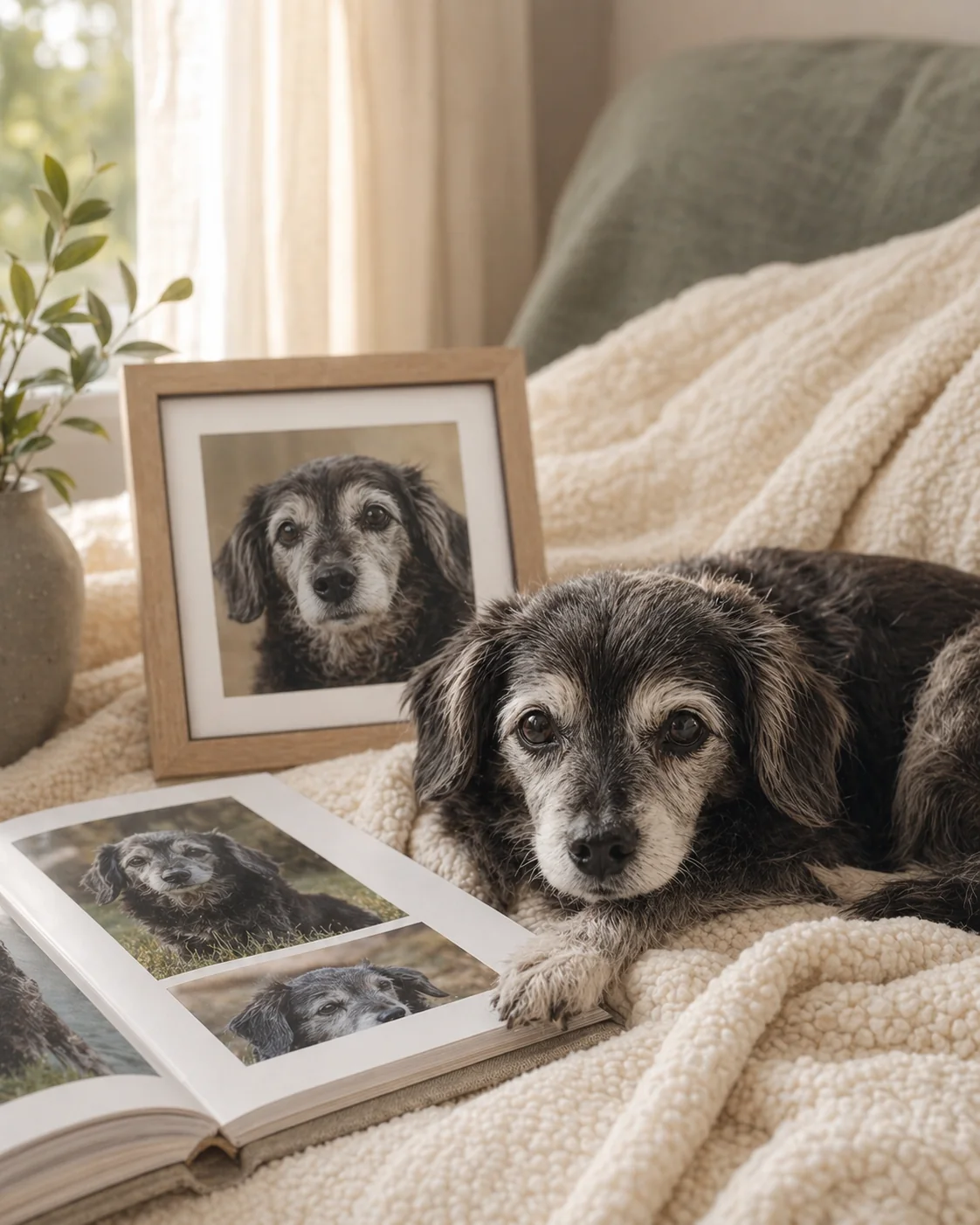
A portrait, frame, or memory page can help when words feel too small. Keep the gift modest unless you know what the family wants. The best dog loss gift feels like a remembrance, not a performance.
What to choose from Pawlogue
Start with a custom portrait if you need a simple gift. Choose a framed print plus QR memory page when you want something more complete. Add paw jewelry when the recipient may prefer a small keepsake.